Sunday, 15 May 2016

An Idiot's Guide to Sun Cream

Sunscreen is a must in the summer – we all know that but why? How does it work? What are the different types? What the hell does SPF even mean? Are we wasting money buying the expensive stuff or does it actually give you better protection? What’s the impact on our vitamin D levels? These are all questions that I have about sun cream, and I’m sure I’m not the only one, so I will try to answer them all in this Idiot’s Guide to Sunscreen.

What are the different types of sunscreen and how do they work?

There are two types – chemical sunscreen and physical sunscreen. You can also get hybrid products which contain both physical and chemical filters.

The two types protect us from the sun in different ways. Physical sunscreens deflect the sun’s rays whereas chemical ones absorb the rays. But how do we the difference? From experience I know that this is not always easy and you may have to look at the ingredients lists to find out. The active ingredient in physical sunscreens is usually Titanium dioxide(TiO2) or Zinc oxide (ZnO) and in chemical ones the list is a bit longer: Octylcrylene, Avobenzone, Octinoxate, Octisalate, Homosalate, Helioplex, 4-MBC, Mexoryl SX and XL, Tinosorb S and M, Uvinul T 150 and Uvinul A Plus. There is no way I could remember all of these when I’m in a shop trying to pick one so my tip would be that unless you can see Titanium dioxide or Zinc oxide in the ingredients list it’s a chemical sunscreen (source). The consistency of the product may also give you a clue about what type it is. Physical filters tend to be thick, opaque and leave a white tint whereas chemical filters tend to be colourless, odourless and runny. As far as I know physical filters currently cannot be used in sprays or aerosols so if it is a spray it's probably a chemical filter.

What does SPF mean?

SPF stands for sun protection factor and it is a measure of how long a sunscreen will protect you from UVB rays. The calculation depends on your skin type (source), and multiply the time for your skin type by the SPF, fair skin = 10 minutes, olive skin = 15 minutes, dark skin = 20 minutes. So for example, I burn but not very easily so I would go with olive skin. If my sunscreen is SPF 30 then the product will protect me from UVB rays for 7.5 hours (15 x 30). This calculation doesn’t apply to UVA rays (the ones that damage collagen and elastic tissue in the bottom layers of your skin but also cause you to tan – a response from your skin to the damage that has already been caused and an attempt to limit any further damage). It’s important to remember though that you will not be protected against 100% of UVB rays. Yes, the higher the SPF the better the protection but some rays will still get through.

Does sunscreen have a negative effect on our vitamin D level?

This is a big debate and with rickets making a comeback it is something many people are concerned about. In 2013 King’s College London carried out a study to find the answer to this question and according to them it’s a “no”. They found that the participants (whose baseline vitamin D levels were about 50 nmol/L and were thought of as adequate) despite using sunscreen still produced significant amount of vitamin D from sunlight exposure. Another study published by The British Journal of Dermatology (source) found that sunscreens can reduce the production of vitamin D under very strictly controlled conditions however their normal usage does not generally result in vitamin D insufficiency.


What’s available?

With the holiday season fast approaching this is the time to go out and buy sunscreen (not that we shouldn’t be wearing it all year round). I had a look through what’s on offer in Boots and compiled a list of the more popular products and some that you may not have heard of, how much they cost and which type of sunscreen it is. I also only included ones with SPF 30 or above because no one wants to be reapplying sun cream every hour ;) 


Should we be using sunscreens all year round?
Yes. UVA rays are present all year round meaning we might not necessarily tan however it can cause damage to the superficial layers of the skin.

Destabilisation
The majority of chemical filters will destabilise due to a variety of factors within a couple of hours of application. This means we are not getting the sun protection that we think we are. Not all chemical filters are photo-stable (most sunscreens use a few different ones in their products) meaning that being out in the sun decreases the length of time they protect us for. Another common factor that contributes to sunscreen destabilisation is the application of other products, e.g. make-up. This is where physical filters are better than chemical ones as they tend to be more natural and don't destabilise anywhere near as quickly as the chemical filters.

The sunscreen debate could go on for days but I hope this post answers at least some of the basic questions and makes it clear what you should be looking out for when buying sun cream.

Saturday, 30 April 2016

My first race - ABP Southampton 10k

Last Sunday I took part in my first race - if you read my blog you may have already figured that out as I have been going on about it for months. 

I think it was last November that me and my housemate Jack decided to sign up for the ABP Southampton 10k following a couple of beers ;) At the time 10k seemed almost impossible, I could only run 5 km at a push and in rubbish time, but signing up gave me a goal to work towards. My training wasn't very consistent. There were weeks where I ran 3 times a week but I also went 3-4 weeks with no running at all. I did a couple of park runs along the way if I had a free Saturday (which isn't very often) and finally managed to get closer to my goal distance on the 12th of March - that was my first 9 km. I never actually managed 10km before the day of the race, I just thought if I managed 9 I can do the last one on the day as I find it a lot easier running with other people.

Just under two weeks before the race I received my race number and a little good luck note along with the run route from the event organizers. That's when it hit me that that's it, time for training is over. I suddenly felt so unprepared! I wanted to go for a couple of longer runs the week before the race and really had to consciously stop myself to make sure I wasn't sore on Sunday. 

On the 24th of April I woke up at 7.30ish to make sure I had breakfast early enough - by now I figured out that a full stomach + exercise = stitch. I know there are people out there who exercise best on an empty stomach but that's just not me. I don't do anything on an empty stomach. By quarter past 8 I was dressed, ready and SO excited! I had so much energy I was bouncing off the walls! 


We made our way to the start just after 9 o'clock ready for the warm up but we were actually there way too early. We ended up standing around for quite a while but it was nice to see all the half marathon runners start first. 


Once they were off it was time for us to line up with the pace-setters. We went around the 70 minute mark as that was roughly what we were aiming for. There was a great, positive atmosphere to the whole event - live music along the way and encouragement from most of the marshalls. I managed to run to the Itchen Bridge but running uphill is still a challenge for me so I ended up walking most of the Bridge itself. I figured that since I wasn't running I might as well take a picture as the weather was nice and the view decent, unfortunately an iPhone camera doesn't really capture it very well ;)


My next milestone was St Mary's Football Stadium. After the bridge I managed to run all the way there and just before the stadium I realised that the 65 minute pace-setter was right in front of me so I decided that I will make that my goal. I managed to keep up with her right to the end of the run and finished in 1:05:15. I couldn't be happier with the result! I shaved 5 minutes of my goal time! That's how much of a difference running with other people makes to my running! 

At the finish line I was very pleasantly surprised by the amount of goodies waiting for us. Along the way I picked up a banana (which I ate straight away as I was starving by 8km nevermind 10!), a goodie bag with tons of leaflets about other races and a yazoo milkshake, a non-alcoholic beer, a t-shirt, women's running magazine, a couple of tea bags and a medal. Considering the run costs around £25 I think you definitely get your money's worth!


Oh but let's not forget the ACTUAL motivation to finish this run ;)


So with my first 10k behind me I think I cought the running bug - I'm seriously thinking about signing up for the half marathon next year. But for now, I'm going to just carry on running and increasing the distance :)

Saturday, 23 April 2016

Weekly meal prep and money saving

Recently there has been a lot of media coverage on food wasted by supermarkets. Some companies have listened to their customer's opinion on the subject and have started making changes to reduce the amount of waste they produce. I think that a good example of this is Asda introducing their 'Wonky Veg Box' where for £3.50 you get 5kg of veg that didn't quite meet the shape criteria for the main shelves. Why hasn't anyone thought of this before? To me it makes no difference if a carrot is wonky or not, it will still taste like a carrot. I have attempted to get my hands on one of these boxes a couple of times but they're always sold out! But anyway, I'm digressing here. Different people will have different opinions on the subject of food waste - from there being nothing wring with it to it being unethical. And even though I strongly agree that wasting perfectly good carrots just because they're wonky when there are people starving is totally wrong, my reason for trying to avoid food waste is a lot more down to earth - money. Wasted food = wasted money and when I'm living off student loans and bursaries I can't afford to waste money on food I'm not going to eat. 

In order to avoid food waste preparation is key. My weekly food prep starts with my diary. Once I know how busy I am likely to be during the next week I can plan how much time I want to spend cooking. For example, I know that I will be out of the house for 10-12 hours Monday to Thursday next week so I need to make sure I plan my lunches and snacks well to keep me going as well as quick and easy dinners because slaving over the cooker for two hours will be the last thing I want to do at 7pm. And this is where my lovely magnetic meal planner, a gift from my boyfriend, comes in. It is one of the best organisational tools you can buy. My one is from Paperchase and cost around £8 which seems pricey however you need to remember that you only use 1 sheet a week so it will last a good couple of years. Of course you can also make your own versions or just use any odd piece of paper you can find, it doesn't matter where you write it. 

The meal planner is where I write my dinner plans. Once I decided on ideas I can write my shopping list to make sure I buy all the ingredients I will need. 

Then it's time for lunches. I don't write these ideas down because not much changes in my lunchbox from week to week so by now I know what I need to buy. Before I go shopping I will check what I need to stock up on and add that to my shopping list. On a typical day where I am out of the house for a long time my lunchbox consists of:

  • Yoghurt (preferably natural Greek)
  • Oatcakes (dipped in yoghurt they're a perfect morning snack)
  • Nuts
  • Salad or a sandwich
  • 2-3 different types of fruit
  • Sunbites

My weekday breakfasts tend to be pretty boring (it's definitely something I should work on). It's usually toast, porridge or granola. I like making my own granola as I find that the shop-bought ones are too sweet to have so early in the morning and it costs a fraction of the ready made ones. I don't currently plan my breakfasts and, similarly to my lunches, I buy things I know I am going to eat. 

In terms of snacks - I tend to have them anyway because I use them for my lunches. But if I come across a recipe I want to try I will add the ingredients to my shopping list ready for when I have time to make them. This weekend for example, I decided to try making some homemade Nakd-style bars and I have to say that they turned out incredible. They taste like the shop-bought ones but cost less than half the supermarket price.

So, with my shopping list complete I head for the supermarket. Since my list includes only the things I am going to use for the meals I planned for next week, provided I stick to it, I'm not going to buy too much food which would only end up in the bin. And this is where the question of promotional offers and bulk buying comes in. Buying in bulk certainly is cheaper however bulk buying fruit and veg is pointless when shopping for one because there's only so much you can eat before it goes off. Cupboard foods, such as pasta, are the products I tend to buy more of however still only when I need it. When it comes to offers I'm obviously not going to turn down a buy one get one free but also within reason - if it's fresh food it needs to be on my shopping list. 

If I follow this process chances are there isn't going to be any food to waste, which means I get to spend the money I would spend on extra food on something else.

Home-made cacao, nut and fruit bars


Friday, 15 April 2016

How I use my Fitbit Flex

Last year for Christmas I asked for a fitbit - a gadget to help me track my activity and sleep. Previously I used iPhone apps which you only activate when going to sleep or exercising but I wanted something that would track my activity all day. 

I have the fitbit Flex which tracks my activity and sleep. It came with a small and a large wristband, a charging cable and a wireless sync dongle which you can plug into your PC but I have never used it, I tend to stick to using the iPhone app instead. The manufacturer claims that the Flex' battery lasts up to 5 days and that it takes 1-2 hours to fully charge - I think that is fairly accurate. The battery life is most definitely affected by how often you set the silent alarm though - the vibration drains the battery much more quickly. It is also supposed to be water resistant (as in splash proof but not swim proof) but I was never brave enough to test this ;)


The dashboard allows you to see the following: the battery level of your fitbit, how many steps you have done and what distance that's equivalent to, how many minutes you have spent being active that day, any exercise you tracked/logged, how many calories you have burned, how much fluids you drank and how long you slept for. The recent Fitbit update also introduced a new feature - hourly activity which allows you to set an hourly step goal and the amount of hours in a day that you want to track this for.


 There are also another three things you can track: your weight, calories eaten and the amount of calories you can still eat that day. I chose not to use these options as I am not currently tracking calories or aiming to lose/gain weight. I have tested these options out previously though just to see what my average daily calorie intake is. The database of food products is absolutely huge! You can find the data for most products and if not, there is definitely a product similar enough for you to be able to get a rough guide. The product information also includes the nutritional value of products including some micronutrients - it's always handy to know where you are with those as well as with your calories. 


So let's break the dashboard down into its separate components. The first two are steps and distance. When you tap on their dashboard titles you can see past data in number and graph forms. The horizontal line on the graph indicates the goal which you set for yourself. Once you set your step goal fitbit will calculate what that is in kilometers/miles and set your goal for you. Throughout the app the stars show that you have met your goal, so as you can see over the past week I met my goals twice. I have set my goal at 10 000 steps because that's when I feel that I have been fairly active and not been lazing around all day. It's also an achievable goal - there's no point in setting goals you are never going to achieve because it will only make you feel worse.


The next item on the dashboard is Active Minutes. On their website fitbit state that Active Minutes are any activity which is more strenuous that normal walking, for example, brisk walking or cycling. Active Minutes are calculated using metabolic equivalents (METs) which measure the energy expenditure during different forms of activity. Active minutes are earned at 3 METs or above. However there is a catch. That level of activity needs to be sustained for 10 minutes or more in order to earn your active minutes. This was developed to help people achieve the Centre for Disease Control's concept of '10 minutes at a time is fine'. Current guidelines recommend 30 minutes of being active a day 5 times a week which is what I based my goal on - 30 minutes 7 days a week. The app page for Active Minutes is very similar to the steps and distance pages - you get the number form data history as well as a graph.


Exercise tracking/logging is the next heading on my dashboard. Flex gives you the option to track three forms of exercise which are walking, running and hiking, all the other ones you need to time yourself and log them afterwards. I like running so I use the app to track my runs however it's important to remember that it's the phone that tracks the run not the Flex band. When I first started using it I used to go for my runs with my band on and with the app tracking on which resulted in the steps being counted twice. The GPS in your phone allows you to review your run on a map and gets the pace and distance data. The app then splits it all up so you can see your run kilometer by kilometer and works out the impact this activity had on your daily stats.


Fitbit can also estimate the calories you have burned throughout the day. Some of the data is based on your basal metabolic rate (BMR) which is based on the data you enter into the app at the beginning - your age, gender, weight and height. The app then combines the BMR with all the activity you have undertaken that day (steps and exercise which you tracked or logged).


Drinking enough fluids throughout the day is really important especially if you are reasonably active. If I don't drink enough it is almost guaranteed that I will get a headache, this is something I figured out thanks to this app. I set my goal at 2 litres a day because I walk around a fair bit and I may be no athlete but I try to exercise a couple of times a week too and I feel that this is about the right amount for me. There are days when I find meeting this goal really easy however more often than not it's difficult and I try to make it up to 2 litres just before going to sleep (within reason of course because if I drink 500ml before bed I will be going to the bathroom every 5 minutes rather than to sleep).


Sleep data is definitely my favourite part of using my Flex band. There are two ways of using it: setting it to sleep mode and not doing anything at all. When you start 'sleep mode' (by continuously tapping the Flex for a few seconds) you are telling the app that this is the time you have gone to bed and are trying to get to sleep. This then allows you to determine how long it takes you to get to sleep. I like to just leave it alone and let it track my sleep once I have actually fallen asleep. That way I can still determine how long it took me to fall asleep because I know what time I went to bed. The issue I have with 'sleep mode' is that I forget to switch it off in the morning so I prefer to just leave it do its job. The layout of this part of the app is essentially the same as the activity, steps etc. The only difference is the background colour. Similarly to the rest of the dashboard you can set a daily sleep goal. Different people will need different amounts of sleep, if I don't get my 8 hours (which as you can see I haven't been getting this week) I can get a little grumpy which is why my goal is 8 hours. The band I have also has the option of setting up a silent alarm which I mentioned earlier on. You set it on the app and it is synced with the Flex. It works by vibrating for a few seconds. I hate being woken up suddenly, such a horrible disruption to my sleep is not a good start of the day so the silent alarm is the perfect solution. If you don't dismiss it, it will snooze automatically and go off again in 10 minutes. 


The final part which I track on my dashboard is the new Hourly Activity. It allows me to see if I'm being active continuously throughout the day or whether it's short bursts of activity. My goal for the day is 10 hours with more than 250 steps per hour. It's set between 07.00-17.00 which is when I anticipate to be the most active. It also allows me to see how long I've been stationary and active for throughout the day. 


I think that with these type of gadgets their accuracy is often questioned. On their website fitbit state that the algorithm used for step counting looks for certain intensity and motions - that's what the step count is based on. They also state that certain movements may affect your step count, for example pushing a trolley whist wearing a wrist-band tracker may result in a slightly lower count and doing a lot of arm movements may result in a higher count. I have noticed this to be the case whilst using my Flex - I often wake up with 10 - 15 steps already on the app when I have stayed in bed all night. When compared to a daily total of, say, 10 000 steps that's only 0.1% of the total, for me that's a low enough inaccuracy to ignore it.

I think that the app and the tracker definitely play a part in keeping me active and well rested. I love my Flex but would definitely think about upgrading to a model that does even more, such as the new Blaze or the Charge HR - it would be nice to be able to track my runs/bike rides without having to take my phone with me.

Friday, 8 April 2016

Diet and exercise summary

I haven’t done a diet and exercise summary for four weeks now (has it really been that long?!) and thought it’s about time to think about how my 2016 plans are holding up.

I spent most of March away and at home. I really like cooking and, unlike baking, I can actually do it so I cooked for my mum a couple of times although I’m not sure how much she appreciated my vegetarian recipes ;) I went home prepared – I took my Deliciously Ella cookbook with me and managed to try a couple of recipes, I shared some pictures of my creations on Instagram. I just love how simple the recipes are! I feel like I preach about this book constantly but it deserves all the praise it gets. Pizza is my weakness so unavoidably I gave into the temptation a couple of times but, as the blog title indicates, it’s all about balance. Overall I think I managed to balance healthy:unhealthy pretty well considering I wasn’t in my usual routine. Right now I need to plan my meals well as I’m busy, I need healthy lunches and plenty of snacks to keep me going all day. Today me and my housemate went nut shopping. Sounds ridiculous I know, but we both find the difference in prices between different shops is incredible, the only supermarket with decently priced nuts is Lidl. The other good shop we found is Grape Tree. It’s a healthy food shop (I’m pretty sure you can find one in most cities but you can also shop online on their website) but as with everything, I try to check labels anyway to try and avoid added sugar. As well as their premium nut mix I bought raw cacoa powder and quinoa which seems to be the only thing I eat for lunch at the moment.

Onto exercise… This on the other hand did not go so well. I did a lot of yoga, I practised nearly everyday. I love how cosy my mum’s living room gets in the evening – I can light some candles, turn on the fireplace and a little lamp. I worked a lot on my headstands and general flexibility which I think has improved slightly. When it comes to more intense forms of exercise I failed miserably. I only went for a run twice which is absolutely ridiculous considering I’m supposed to be running 10k in two weeks’ time. One of those runs was 9k however the next one was barely 2.5k which may have put me off going running again. And now it’s been almost three weeks since my last run… not good.

So in summary – I need to keep it up with the diet (maybe stop the Easter chocolate I’m still munching through, but the best way to stop is to eat it all so that there’s no temptation right?) and seriously up my exercise game. Goal for next week: at least 2 runs and 2 gym sessions plus yoga.

Tuesday, 29 March 2016

Trip to Portugal

I wasn’t planning on writing a post about my holiday – just my usual weekly Friday post but I decided I’d like to share some of the photos and what we’ve been up to on my blog.
We, as in Callum and I, booked this holiday very spontaneously in December when the miserable weather was taking its toll on me. I’m not a fan of the cold and rain, never mind the dark mornings. And so last Monday we went off to Albufeira in Portugal.
Since we’re both students this had to be holiday on a budget. This however only meant two major sacrifices – sleep, as the flights were very early in the morning, and excursions. We flew over with Ryanair to Faro, the flight was delayed by at least an hour in both ways but hey, we got there and back home safe and sound.

We didn’t really think too much about it when we were choosing our hotel, we just booked the one that wasn’t too pricey and had decent Tripadvisor reviews. And we got lucky. Natura Algarve Club turned out to be VERY good value for money. It was well maintained and, most importantly, clean. The staff couldn’t have been more helpful – we had a problem with the heating in our room and it was resolved the next day.


We spent most of our holiday walking around the old town and sightseeing. According to my Fitbit we walked at least 10km every day. The hotel was a good half hour walk away from the old town but neither of us mind walking, for me it’s the same as walking to campus. The town is so beautiful! I loved all the white buildings and cobblestone pavements. There’s so much you can do there but it just all depends on how much money you have to spend. We originally planned to go horseriding but didn’t book it in the end. The marina was a much newer area with colourful apartments and lots of boat and fishing trips to offer but I much preferred the charm of the old town. Despite the tourists and loud bars and restaurants there still was a sort of laziness about it. We spent two afternoons sunbathing on the beach and found ourselves a lovely little snack bar that sold by favourite drink of the holiday – fresh orange juice. Considering most bars’ Happy Hour lasts all day long that’s pretty boring, I know. Although we got tempted by port one afternoon, we were in Portugal afterall. 

View from Ricardo's Pizzaria where we went for dinner one night.

One of the streets in the old town.

Hand-painted tiles on buildings in the old town.

Praia De Albufeira.

Old town.

I tried posing but fell instead ;)

Port and lemonade and fresh orange juice.

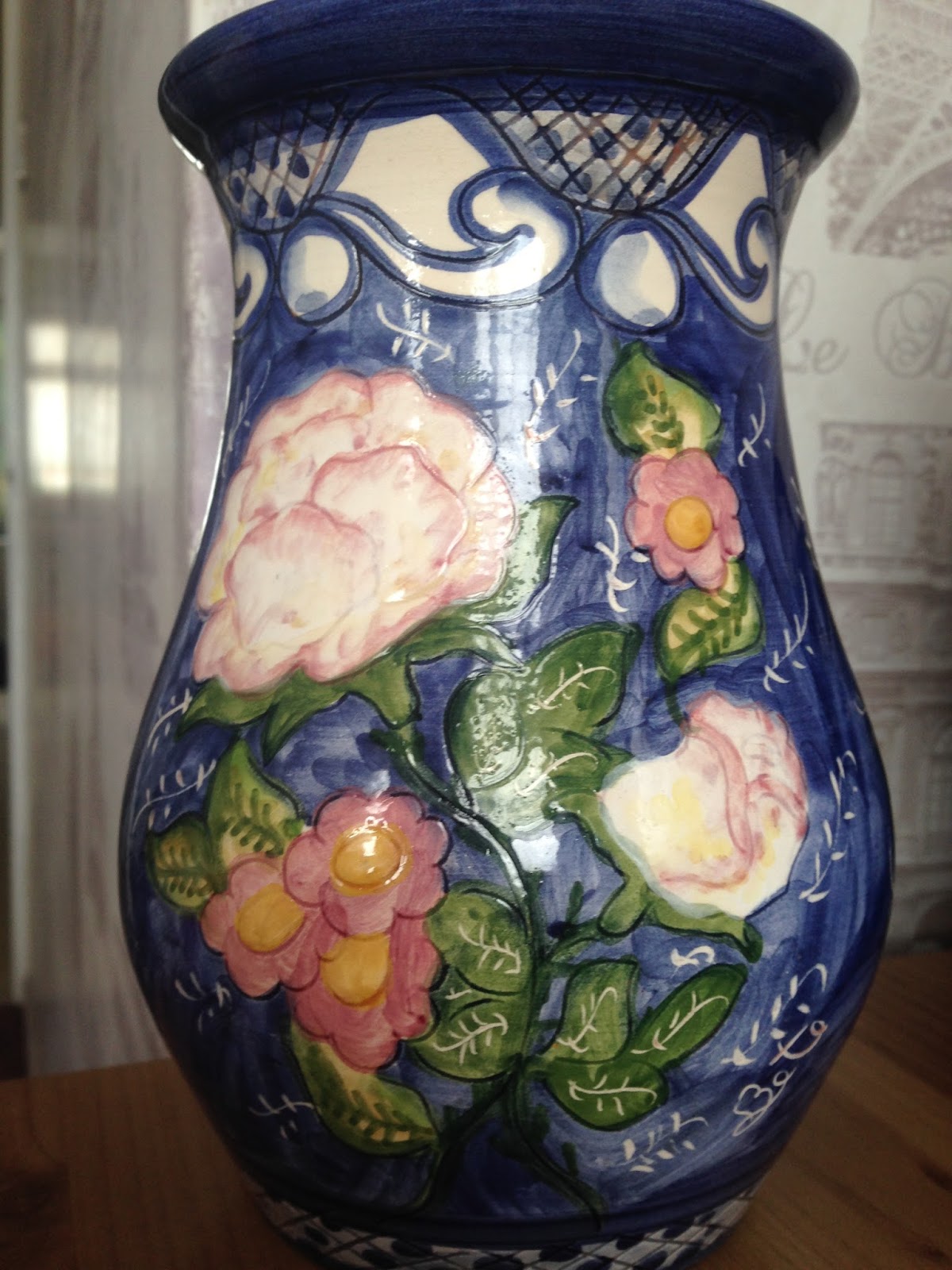
The old town is full of touristy-type shops. But amongst all the tourist junk you can find some really beautiful things, especially pottery. I treated myself to new vase – I decided that I don’t have one and that flowers will definitely look nicer in a vase than in a pint glass (oh the joys of student living).


Would I go back there again? Definitely! Even though we didn’t get up to much and just enjoyed sight-seeing the town we stayed in, it was just the kind of relaxing break we needed before exams start. 


Saturday, 19 March 2016

10 tips for waking up and getting on with your day

Kate Faithfull-Williams’ article in Boots’ Health & Beauty magazine (March/April 2016 issue, yes another free magazine) inspired me to think about my own getting up habits and what gives me more energy in the mornings. Here is a list of tips that I think can help you to get up and get on with things – I try to stick to them myself but may not always succeed ;)

1. Get enough sleep in the first place. It’s an easy calculation – you know what time you need to be up so count back 8 hours from that plus another hour to allow yourself to settle in bed (read a book or listen to some music, anything that will make you switch off) and make sure that that’s when you go to bed. There are even apps that will remind you to go to bed based on the alarm you set (click here). Sometimes life does get in the way of those magic 8 hours but I think that if you prioritise your sleep over, say, checking facebook or watching TV you will thank yourself for it in the morning. Here’s the link to my previous blog post about sleep rules.

2. Wake up at the same time every day. I sometimes have issues with this however I have stuck to getting up before 8am for the last couple of weeks. It feels like I have a routine and means that I’m tired in the evening so can go to bed early (which is what I love!). An early start also makes me more productive. I’d say between 8am and 1pm is my most productive time of day, especially if I have to study.

3. Set your alarm clock for when you actually want to get up and DON’T SNOOZE IT! Those extra 15 minutes that you think you absolutely need will only make you feel more tired.

4. Open your curtains straight away. I often struggle with getting up when it’s still dark outside. Having one of these sunrise-imitatingalarm clocks would make it so much easier!

5. End your shower with a cold blast. I don’t shower in the mornings, I much prefer having a relaxing bath in the evening as I always associated it with the 
end of the day, it’s a part of my bedtime routine plus I can’t deal with washing my hair in the morning. So I was cruel and asked my boyfriend to test this one. According to Callum it work very well in terms of waking you up but makes you want to get out VERY quickly.

6. Get dressed and make your bed as soon as you get up. I LOVE pyjama days but I’d be lying if I said they’re productive. Getting dressed definitely makes me feel like it’s time to get things done and once you put the effort in to actually making your bed you won’t want to ruin it by jumping back in.

7. Rehydrate. My mum swears by a glass of water with honey and the juice of half a lemon half an hour before breakfast. She starts prepping it the night before by adding the honey to boiled water and then just adds the lemon juice in the morning.

8. Slow releasing carbs for breakfast. By now most of us know that a sugary breakfast will give you a boost of energy but you’ll feel tired again pretty quickly. Something like wholegrain oats with fruit and seeds is perfect to keep you going for the whole morning. And if you feel you need a snack before lunch opt for something similar, e.g. oatcakes. Oh, and don’t even think about skipping breakfast!


9. Have an action plan for every day. I can’t get anything done without a ‘to do’ list which is why I tend to write one in my diary most mornings. It may involve tasks as simple as ‘Walk the dog’ or ‘Clean the bathroom’ but it makes me focus on the day ahead and allows me to plan and prioritise. Plus it feels so good to tick things of ‘to do’ lists!

10. Fresh air. A walk with your dog will not only make him or her very happy, but will also help you to wake up. A brisk morning walk to school/work/university may seem like torture at the time but once you get there you will definitely feel more awake and energetic than your friends who opted for the bus.

Not everyone is a morning person though, and sometimes I'm quite jealous of the people who actually can have a lie in. When I have one, I can write off the whole day as nothing will get done and I'll just want to stay in my Pjs all day :)